Governance-first AI for regulated industries.
- SR 26-2 model risk
- FinCEN AML/CFT
- Regulation B
Where trust is regulated. Risk models, compliance automation and fraud detection built to pass the strictest model governance in any industry.
Where patient safety comes first. AI for drug and device makers, hospitals and payers that clinicians trust and quality and compliance teams can sign off.
Where reliability is non-negotiable. AI for grid operations, asset maintenance and customer operations, with the safety and compliance controls operational technology requires.
Where attention is the market. Network optimization, personalization and streaming reliability at the scale telecoms, studios and game publishers operate.
- to a senior team on site
- 30–60days
- lower rates than large systems integrators
- 30–50%
- of fees tied to outcomes
- Up to 30%
- regulated industries, operator depth in each
- 4
Enterprise AI stalls for operating reasons, not technical ones. The gap between what AI can do and what your organization has deployed widens every quarter.
Pilots stall for the same four reasons. Here is what we do about each.
- 01
Pilots stuck in notebooks
Demos that were never integrated with the systems people actually use.
We build for production from the first sprint: integration, testing and rollout are in scope, not a phase two.
- 02
Data nobody trusts
Dirty schemas, slow pipelines and no lineage, so retrieval and models cannot be relied on.
We fix the data estate in the order AI needs it, with lineage and quality controls that stay in place.
- 03
Governance that blocks at the end
Legal and risk teams asked to approve a finished system with no evidence to approve it on.
Guardrails and evidence are written as code from day one, so review works from evidence, not argument.
- 04
Nobody owns year two
No drift monitoring, no cost control and no service levels once the project team leaves.
We run what we build: monitoring, assurance and cost management under agreed service levels.
Three practices. One firm accountable for all of it.
Buy one offering or an integrated program. Either way, the people who design the system are the ones who run it.
- AI & DataDecide where AI will pay off, build the systems and data platforms to deliver it, train your teams, and run it once it is live.AI Readiness & Value MapData Estate DiagnosticAgentic Systems Engineering
- Security, Assurance & GovernanceThe controls, evidence and governance that let AI pass review with regulators, risk teams and auditors, and keep passing it.AI Risk & Regulatory ReadinessSecurity Posture ReviewGuardrails & Policy-as-Code
- Cloud, Infrastructure & ApplicationsThe cloud, infrastructure and application foundations AI needs, modernized without stalling the AI program that is waiting on them.Cloud & Infrastructure StrategyApplication Portfolio AssessmentMigration & Platform Engineering
- Embedded AdvisoryThe 25th offering: a named senior advisor inside your leadership team.
Most firms sell you the first two. We are built across all four.
Every practice is offered in each mode. Pick a mode to see what it includes.
Assessments, strategy and business cases. You leave with a clear decision, a cost, and a plan your board can approve.
- AI Readiness & Value MapA short assessment of where AI can create measurable value in your business, what is in the way, and a prioritized plan you can fund.
- Data Estate DiagnosticA review of your data platforms, quality and governance against what your AI plans actually need, with a gap list and a fix sequence.
- AI Risk & Regulatory ReadinessWhere your AI use stands against the rules that apply to you (model risk guidance, the EU AI Act, HIPAA, NERC CIP and others), and what to fix before launch.
- Security Posture ReviewAn assessment of your security controls as they apply to AI systems, data pipelines and the cloud platforms underneath them.
- Cloud & Infrastructure StrategyWhich workloads go where and at what unit cost, with a tested exit route for each, and the sequence that unblocks AI soonest.
- Application Portfolio AssessmentAn inventory of your applications with a clear call on each one: keep, modernize, replace or retire, and what AI needs from it.
Senior engineers build the systems, platforms and controls, integrate them with what you already run, and take them live.
- Agentic Systems EngineeringDesign and build of AI agents and LLM applications that are integrated with your systems, tested against real cases, and ready for production.
- Data Platform ModernizationModern data platforms (lakehouse, streaming, feature stores, retrieval) that give AI clean, timely and governed data to work from.
- Guardrails & Policy-as-CodeYour AI policies implemented as enforceable, testable controls: input and output filtering, access rules, logging and the evidence trail that goes with them.
- Zero Trust ArchitectureIdentity-based access, segmentation and least privilege designed into the platforms your AI and data run on.
- Migration & Platform EngineeringCloud migration and platform build with infrastructure as code, security built in, and landing zones ready for AI workloads.
- AI Infrastructure & Inference PlatformsGPU and inference infrastructure, model serving, vector and retrieval services, sized and secured for production use.
Operating models, training and governance so your people use what was built, and keep using it after we step back.
- AI Fluency ProgramsRole-based training so leaders, managers and teams understand what AI can do, how to use it safely, and where it applies to their own work.
- Agent Operating Model DesignHow people and AI agents share the work: roles, approvals, escalation and oversight, written into the way you operate rather than a policy document.
Managed operations, monitoring and continuous assurance after go-live, with service levels and evidence for audit.
- Managed AI OperationsWe run your AI systems after launch: monitoring, incident response, cost control and improvements, under agreed service levels.
- Model Lifecycle & Drift MonitoringContinuous tracking of model accuracy, bias and drift, with retraining and sign-off processes that satisfy internal audit and regulators.
- Continuous AI AssuranceOngoing testing, monitoring and evidence collection that shows your AI systems still meet the bar every quarter, not only at launch.
- Managed Detection & ResponseDetection and incident response across identity, cloud, endpoints and your AI and data platforms, run by our team around the clock.
Four regulated industries. Operator experience in each.
Our senior people have run businesses serving these sectors, so they know the regulator's questions before the regulator asks them.
All industries 01 / 04Financial Services & Capital MarketsRisk models, compliance automation and fraud detection built to pass the strictest model governance in any industry.Risk modeling and model validationCompliance and regulatory reportingFraud and financial-crime intelligence
 02 / 04Life Sciences & HealthcareAI for drug and device makers, hospitals and payers that clinicians trust and quality and compliance teams can sign off.Clinical decision supportCare operations and capacityRevenue cycle and claims
 03 / 04Utilities & EnergyAI for grid operations, asset maintenance and customer operations, with the safety and compliance controls operational technology requires.Grid optimization and forecastingPredictive maintenanceRenewable integration and trading support
 04 / 04Telecom, Media, Entertainment & GamingNetwork optimization, personalization and streaming reliability at the scale telecoms, studios and game publishers operate.Network optimization and predictive operationsPersonalization and recommendationReal-time gaming and fan intelligence
E2F: five stages from today's baseline to AI in production.
Each stage has a named owner, a measurable gate and a defined mode of engagement. It is how we price, staff and govern the work.
- Think
Assess
A readiness diagnostic: maturity, talent gaps and where the value is.
Readiness scorecard and value map
- Think
Architect
The technical and commercial blueprint, vendor choices and business case.
A signed-off plan
- Build
Assemble
Senior talent and platform partners deployed into the program.
Delivery team on site within 30 to 60 days of the first conversation
- Adopt
Activate
Hands-on delivery, adoption in the business and value capture.
First business result in under six months
- Run
Advance
Operate, monitor and keep improving as the technology moves.
Production AI as the operating standard
New from Miracle Minds.
 Case study60 daysfrom first conversation to a senior team working on siteA senior AI risk-modeling team placed in 60 days
 Point of viewWhy enterprise AI stalls between pilot and productionWhat AI can do and what most enterprises have actually deployed are drifting further apart every quarter. The cause is operational, not technical, and generalist firms are not built to fix it.
 Case study99.99%uptime through the launch window99.99% uptime through a major streaming launch
 ArticleInside E2F: our five-stage path from pilot to production AIE2F (Enterprise to Frontier) is how we run an engagement: five stages, each with a named owner, a measurable gate and a defined mode of engagement. It is how we price, staff and govern the work, not a diagram.
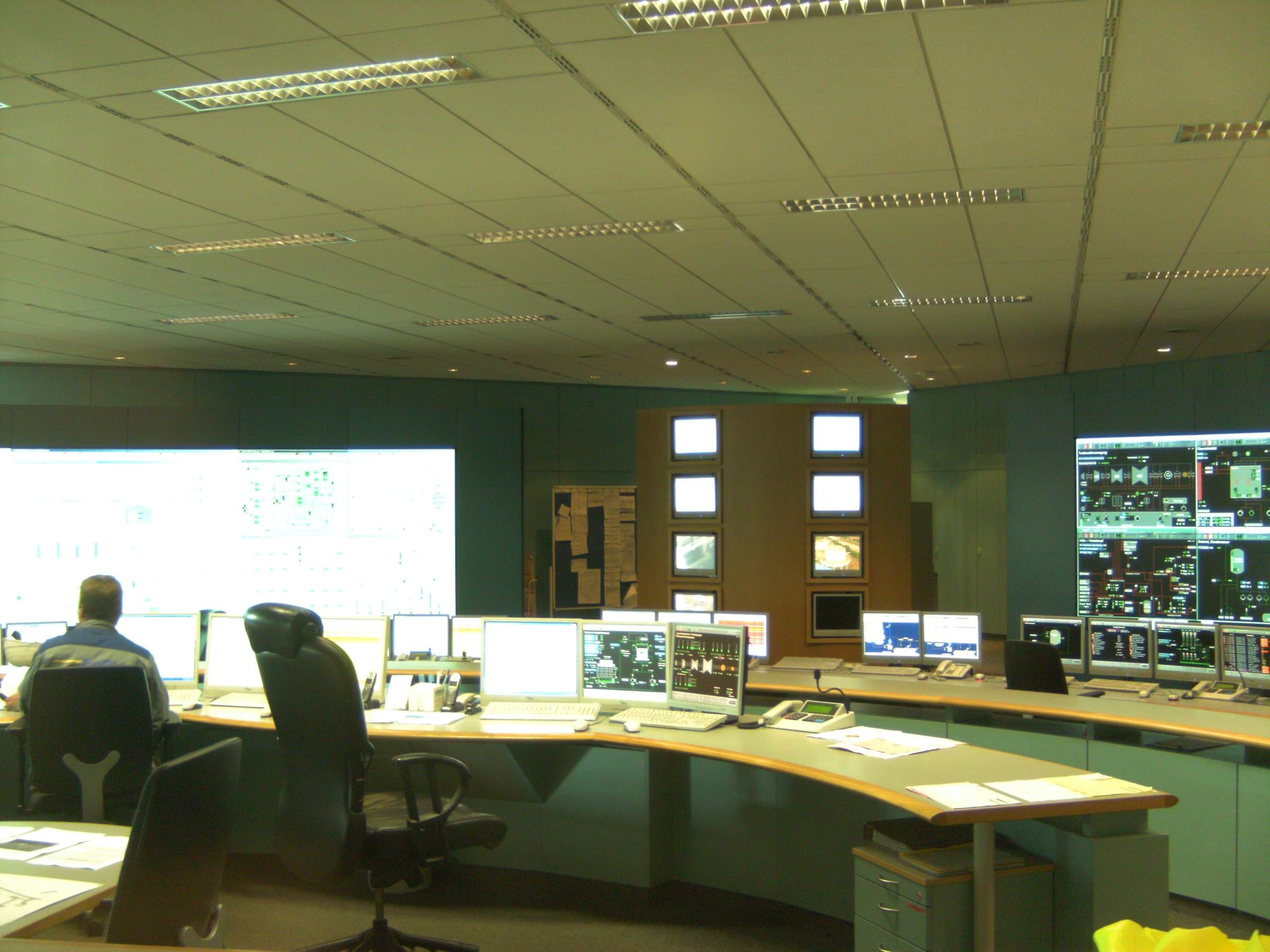 Case study6,000+users onboarded in four monthsGenerative AI rolled out to 6,000 utility employees in four months
 ArticleOnshore-led, globally delivered: the new economics of AI deliveryTier-one advisory quality no longer requires tier-one cost. An onshore-led, globally delivered model cuts effective rates by 30 to 50% without moving the accountability offshore.
Four reasons enterprises choose us over a larger firm.
Senior operators, frontier-lab alignment, one firm from strategy to run, and fees tied to your outcomes.
Operators, not a consulting bench
Our senior people have run technology and services businesses for your industry before advising on it. Senior teams are on site within 30 to 60 days of the first conversation.
Senior bench across all four industries
Aligned to the frontier labs, multi-stack by choice
Direct engineering relationships with the labs defining the frontier, and delivery depth across Microsoft, AWS, Google and open source. No partnership decides our recommendation.
Vendor-neutral by design
One firm from strategy to run
Most firms hand off at go-live. We are structured across Think, Build, Adopt and Run, so the people who designed the system are the ones operating it.
Accountability does not transfer at go-live
Economics aligned to your outcomes
An onshore-led, globally delivered model gives tier-one quality at 30 to 50% lower effective rates. Up to 30% of fees can be tied to agreed results, and advisory and M&A engagements can be run on a success fee.
Up to 30% of fees performance-based
What enterprises ask before they engage.
Direct answers on what we do, how we work, how delivery is priced and who is accountable after go-live.
What does Miracle Minds do?
Miracle Minds is an AI advisory and engineering firm for regulated industries. We help banks, utilities, life sciences and healthcare organizations, and telecom and media companies take AI from pilot to production and keep it compliant once it is there. We set the strategy, build the systems, train your teams and run what we build, as one accountable firm.
What is the frontier gap?
It is the distance between what AI can do today and what an enterprise has actually put into production. It shows up in three places: pilots that never reach production, governance that trails capability, and foundations built for older workloads. The gap widens every quarter, and closing it is an operating problem more than a technology one.
Which industries do you work in?
Four: financial services and capital markets, life sciences and healthcare, utilities and energy, and telecom, media, entertainment and gaming. Each has its own regulatory requirements, from model risk management in banking to HIPAA in healthcare and NERC compliance in energy, and our teams have operated inside each of them.
What do Think, Build, Adopt and Run mean?
They are the four ways we engage, and every service is offered in each. Think produces a decision you can fund. Build puts the capability into production. Adopt makes sure your people use it and keep using it. Run operates and monitors it after go-live. Most firms sell only the first two, which is why architecture and adoption drift apart.
What is the E2F framework?
E2F (Enterprise to Frontier) is the five-stage method we use to run an engagement: Assess, Architect, Assemble, Activate and Advance. Each stage has a named owner, a measurable gate and a defined mode of engagement. It governs how work is priced, staffed and reviewed, which is what lets us put part of our fees at risk.
How quickly can a team start?
A senior delivery team is usually working on site within 30 to 60 days of the first conversation. Assess and Architect are kept short so that the Assemble stage of E2F lands inside that window. In one financial services engagement, a senior AI risk-modeling team was placed in 60 days at a 40% lower blended rate than the tier-one alternative, and the platform shipped on schedule.
How is your delivery model priced?
Senior advisory and architecture are delivered onshore, in your time zone. Engineering scale comes from our governed teams in India and Europe. That structure gives effective rates 30 to 50% below large systems integrators at the same advisory quality, and up to 30% of fees can be tied to agreed outcomes.
Are you tied to a particular AI vendor or cloud?
No. We work directly with the frontier labs, including OpenAI, Anthropic and Google DeepMind, and with AWS and Microsoft, and we deliberately stay multi-stack. No partnership determines our recommendation, and we have delivered on hyperscaler-native, open-source and specialist vertical platforms.
Who is accountable after go-live?
We are. Every engagement has a named delivery lead and a single escalation path, and that does not change at go-live. Our Run services cover managed AI operations, model monitoring, continuous assurance and managed cloud, so the people who designed the system are the ones operating it.